plumbingmk.com
- boiler replacement wavendon2.3
- boiler upgrade wavendon3.1
- new boiler installation wavendon2.8
For business owners who should be busier
Get found on Google and in AI answers by the people ready to buy, and know exactly which search sent each enquiry. No agency. No developer. Just you, an AI assistant and one simple weekly loop.
1,295
searches averaging page one on Google across 106 of our websites
Google Search Console, UK, 30 Sep to 27 Oct 2026
£10,650
job a roofer messaged me about. The screenshot's further down the page
WhatsApp, 11 Apr 2026. Turnover, not profit
2 days
from publishing to seeing an AI answer cite a plumber's page
My experience, not a promise
The first figure is Google's own data with business-name searches removed. The second is a customer's own message and the third is my experience. None of them is a typical result, and none is a promise about your business.
You know the feeling. It's a quiet Tuesday. The last job went brilliantly. The customer said they'd tell everyone. And the phone still isn't ringing.
You're good at what you do. Your customers would tell anyone who asked.
Nobody's asking them.
The person who needs you today is standing in a cold kitchen, or sitting at a desk, typing a question into a phone. Whoever appears gets the call. Whoever doesn't, never knows the job existed.
That's the bit that should keep you up at night. You'll never see the enquiries you didn't get. There's no invoice for them. There's just a quiet phone, a competitor's van outside a house you'd have loved to work on, and a website somebody told you was finished.
And now the ground has moved. More customers are asking ChatGPT, Claude or Perplexity before they ask Google. They don't get ten blue links to scroll. They get an answer, with names in it.
Do this before you read another word
Open ChatGPT. Start a fresh chat. Type this, with your own trade and town:
Who should I call for [what you do] in [your town]?
Read the names it gives you.
Those businesses aren't luckier than you. They may not even be better than you. They just made it easy for the machine to know who they are.
If your name was there, well done. This book will help you keep it there. If it wasn't, carry on reading.
What nobody tells you
It's not your work. It's not your prices. It's not your van, your logo or your area. And it definitely isn't you.
Google and ChatGPT can't ring your old customers. They can't drive past your van. They only know what's written down: what you do, where you do it and what backs it up.
If that isn't clear, accurate and on a page they can read, you're asking them to recommend a stranger. However good you are.
So you don't need to shout louder. You don't need a prettier website: a site can look impressive and still leave the phone quiet. You need to be easy to find and easy to understand.
Word of mouth keeps you going. Being found fills the diary.
None of these shows up on an invoice. You'd never know they were costing you. Any one of them is enough to keep the phone quiet.
It looks lovely. It has no commercial job. Nobody ever decided which customer it's for or what counts as a win, so it's politely doing nothing.
You describe your work the way you'd say it to another professional. Your customer types something else entirely, and finds someone who used their words.
Your details are thin, out of date or contradict each other. AI can't confidently put forward a business it can't make sense of.
You don't know which channel brought in which job, so you keep paying for the thing that didn't work and starve the thing that did.
Someone found you, liked you and tried to get in touch. The form failed, or nobody answered. Better rankings won't fix that.
How many of those did you just recognise in your own business?
How you do it
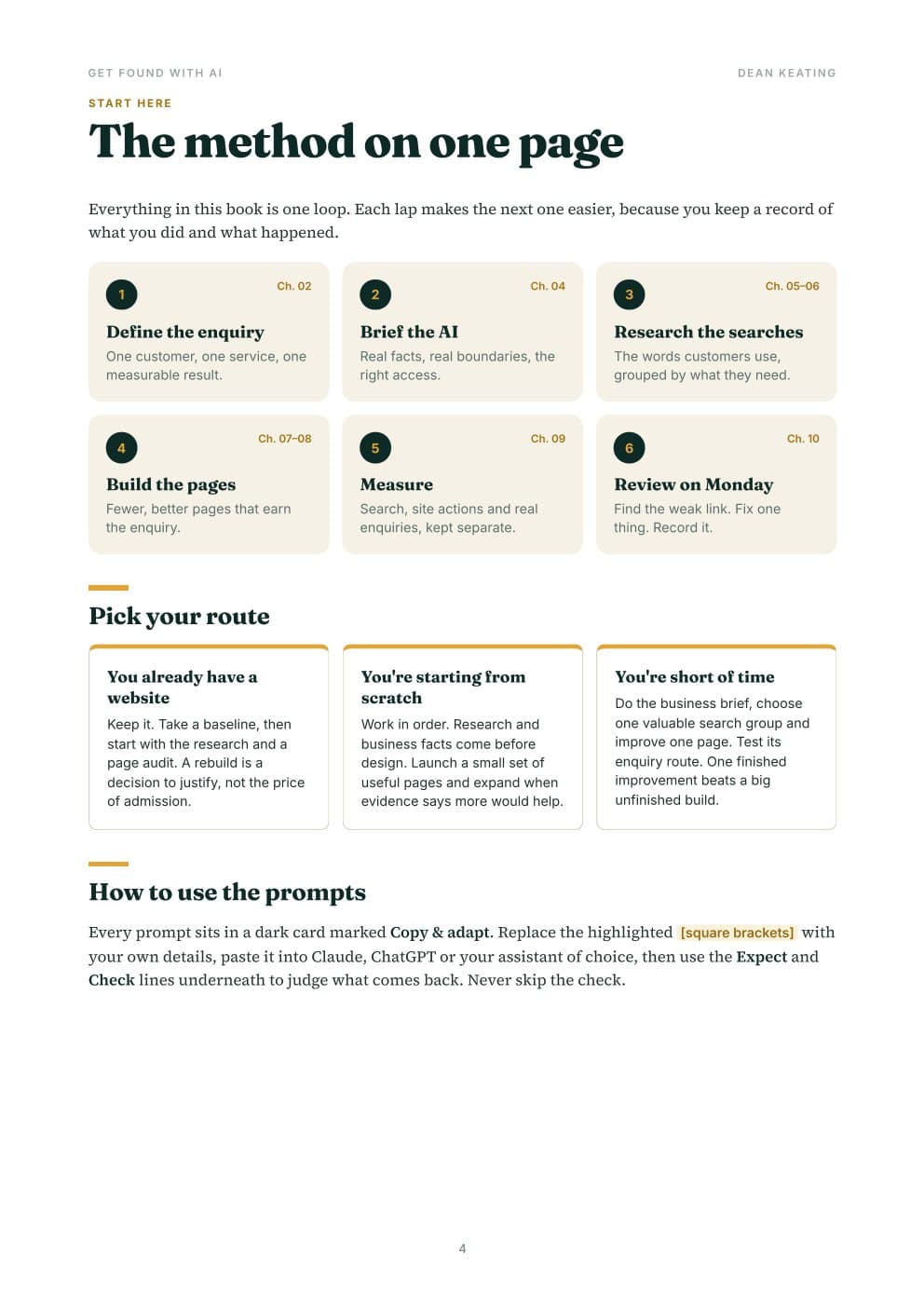
One loop finds and fixes all five. AI does the research, the drafting, the building and the reporting. You stay in charge of the facts, the offer and the decisions. Set it up once, then every Monday you find the weak link, fix one thing and write it down. Every lap makes the next one easier.
1
One customer, one service, one result you can measure.
2
Real facts, real boundaries, the right access. Treat it like a new member of staff.
3
The words customers really use, grouped by what they need.
4
Fewer, better pages. Keep your site if you have one.
5
Search, site actions and real enquiries, kept apart so nothing flatters you.
6
Find the weak link. Fix one thing. Write it down. Go again.
This is what you're actually buying. The book is just how you get there.
01
You've stopped guessing. You know the words your best customers type, and which searches are worth your time.
02
Not more traffic. More of the customers you actually want, landing on a page that answers what they came to ask.
03
Your business is described accurately, in a way ChatGPT, Claude and Perplexity can read, repeat and cite.
04
You can point at a search, a page and a date. You never again have to wonder whether your marketing is working.
05
Your domain, your site, your data, your accounts. Nobody can hold your business to ransom over a password.
06
One sheet. One review. One improvement, written down. Each week starts from where the last one finished.
The receipts
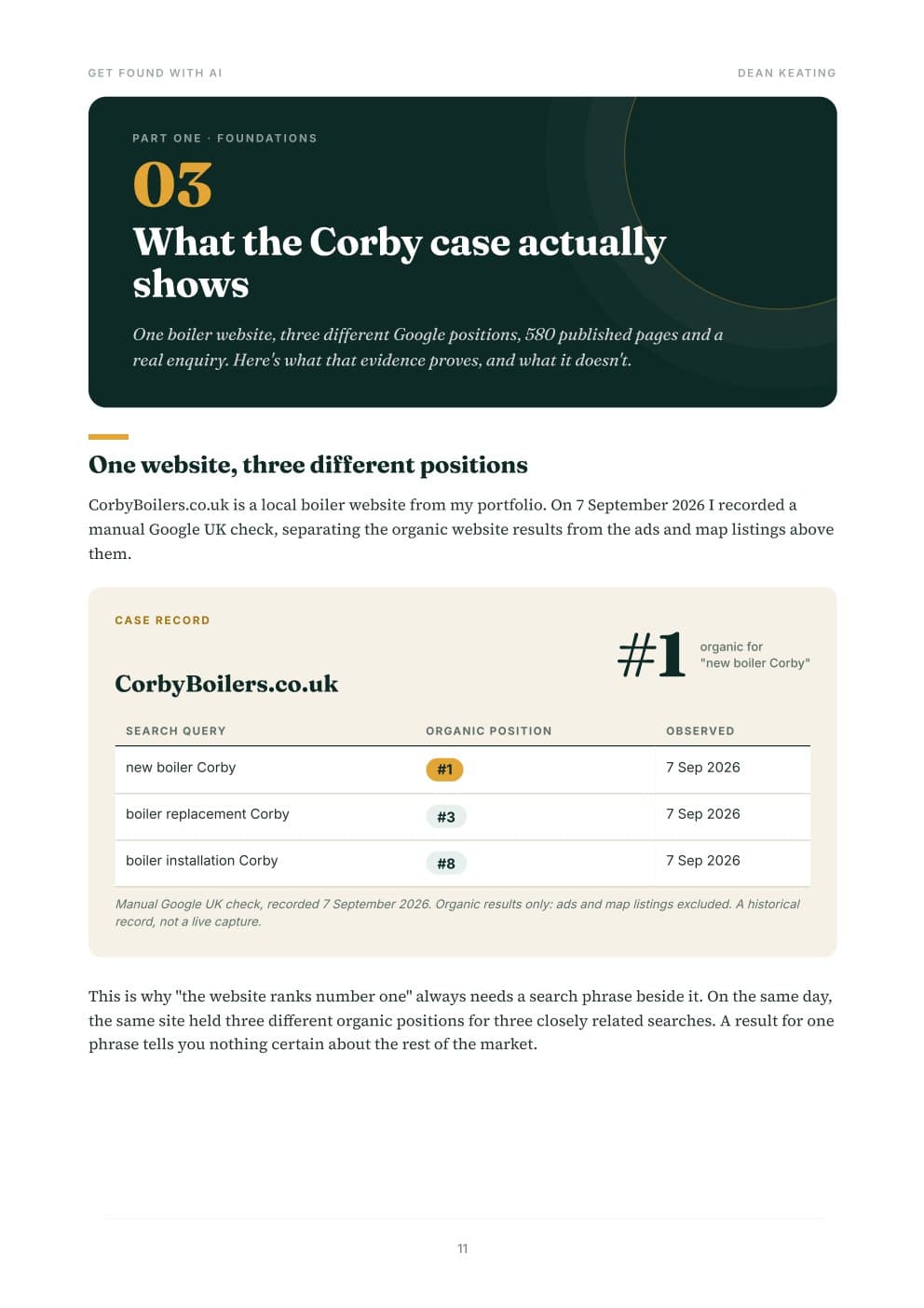
CorbyBoilers.co.uk is a site from my portfolio. On 7 September 2026 I recorded a manual Google UK check, organic results only, with the ads and map listings taken out.
| Search | Position |
|---|---|
| new boiler Corby | #1 |
| boiler replacement Corby | #3 |
| boiler installation Corby | #8 |
Positions move, which is why you date them. When I checked again on 30 October 2026, "new boiler Corby" was sitting around #3. Still page one.
And then somebody got in touch.
Hi, I'm after a quote for a new boiler please
Of course. Quick question: where did you find us?
Recreated from the anonymised record, in the customer's own words.
That's one enquiry, not a sales figure, and I'll show you in the book exactly what it does and doesn't prove. But look at the shape of it. A person had a need, typed it into a box, and a website put a stranger in touch with a business. That's the whole game, and the book shows you how to play it for yours.
Not one lucky site
This isn't a screenshot from a good day. It's Google's own Search Console data for websites we've built. Business-name searches are taken out, so these are people looking for the work, not the company. 263 of those searches average in the top three.
That's 17 of them. There are 89 more.
Average positions from Google Search Console, UK, 30 Sep to 27 Oct 2026. Google changes results by location and device, so what you see can differ. Includes sites for former clients. Not a typical result or a promise about your business.
In their own words
Real messages from people we've built websites for. Names are cropped out for their privacy. The book's new, so these are about my work, not the book.
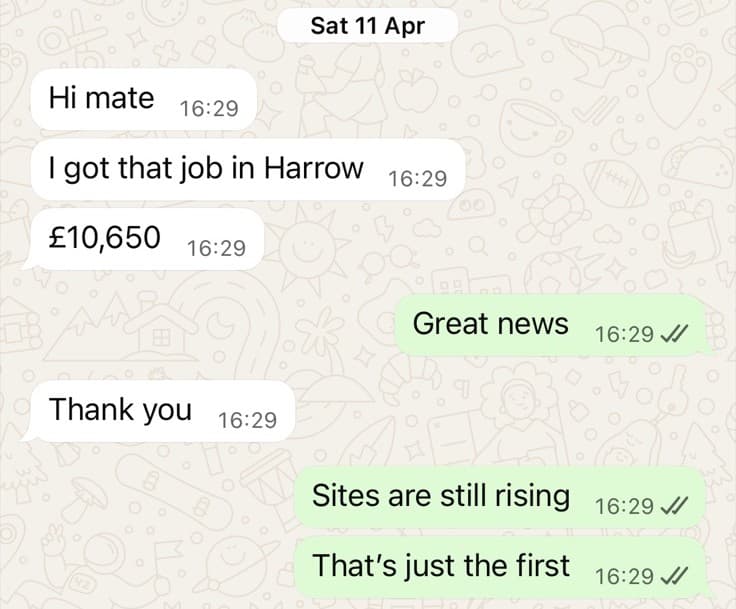
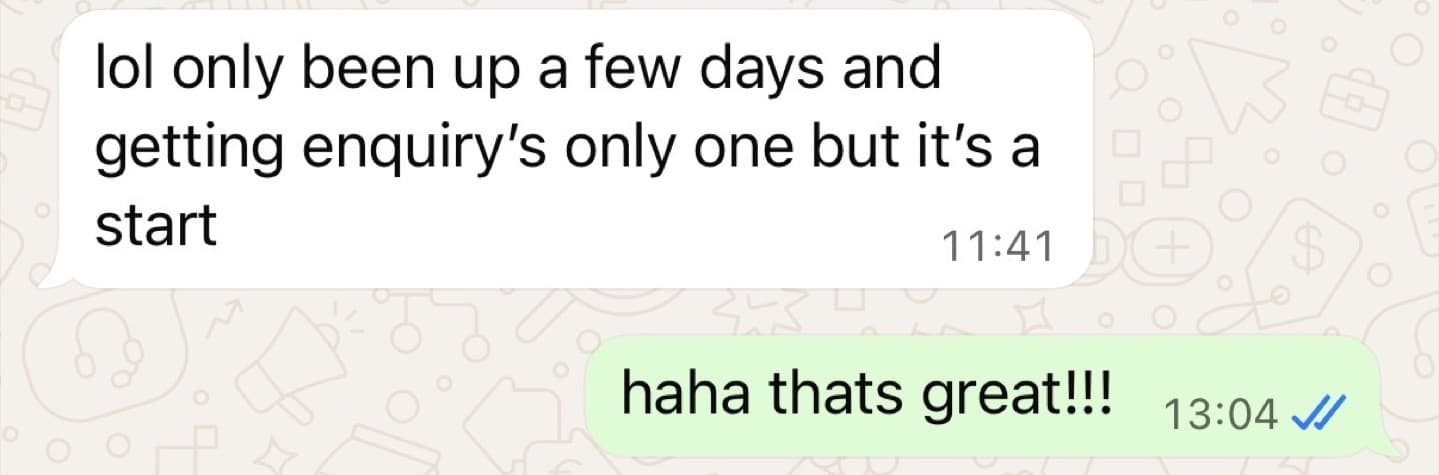
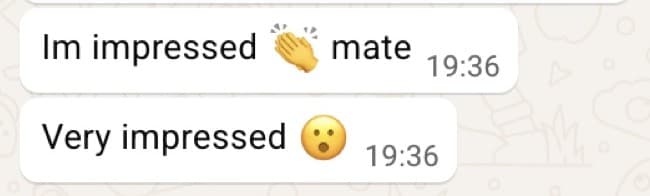
Individual experiences, not typical results. Job values are turnover, not profit.

Dean Keating. Former stand-up, current Mac Mini owner.
Who's telling you this
I was a stand-up comedian. Then COVID stopped live work and the gigs vanished. We were homeschooling two kids, I'd already closed one website business, and I wanted something that fed my family without turning into another job with more worries attached.
One night, while my wife was putting the children to bed, I watched a video about running an AI assistant on a Mac Mini. I went to Argos before it closed. She came downstairs and I'd disappeared. My explanation when I got back was that I'd "gone to buy a computer". My family thought I'd gone a bit mad.
Then the money we were expecting didn't arrive. We went on a holiday that was already paid for, and every night, once the kids were asleep, I sat in a hotel in Fuerteventura working on an offer on my phone.
One WhatsApp message won a roofer. Three websites. £1,500. Roughly £3,000 came in over that holiday.
That's turnover, not profit, and there was plenty of work still to do. But it changed how I saw all of this. I stopped asking AI for paragraphs. I started asking it for finished work.
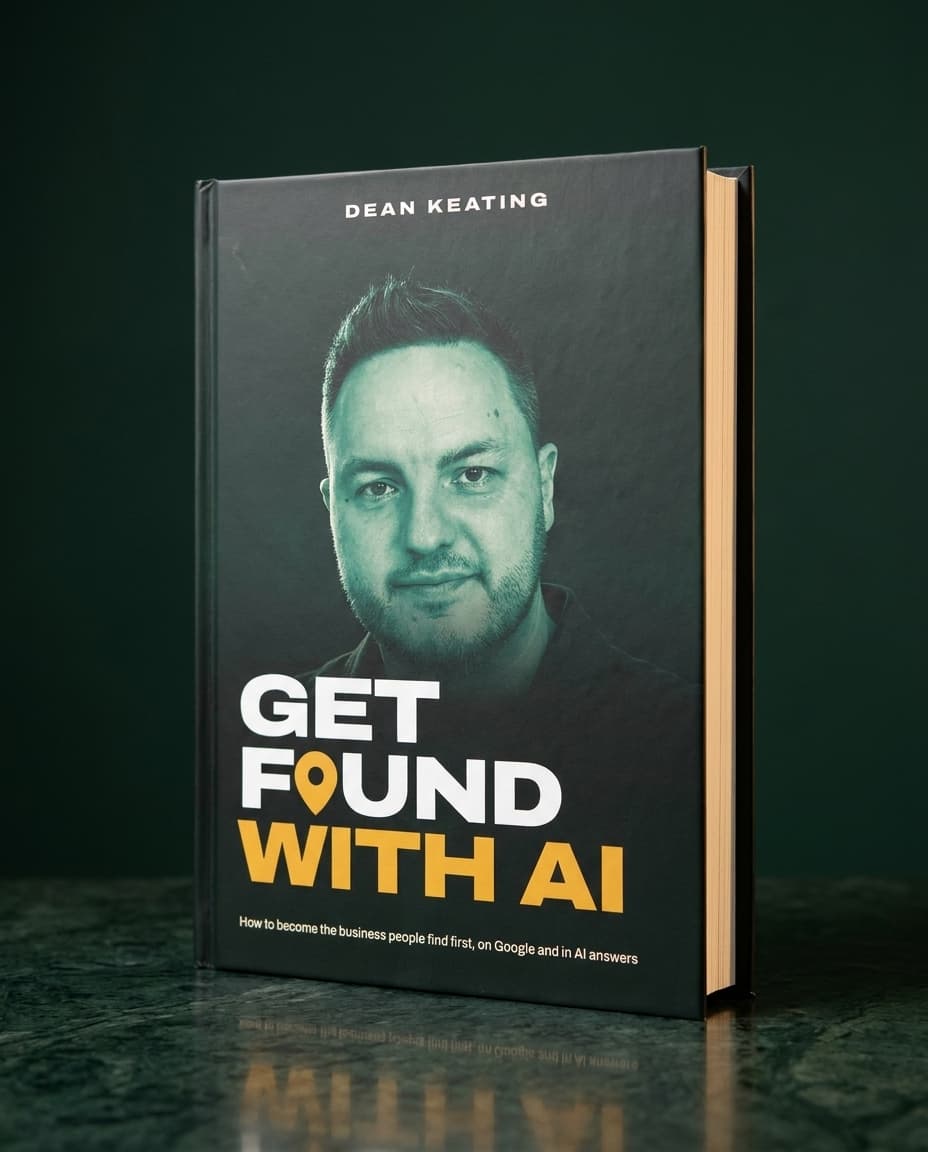
This book is everything I've learned since. It started as a talk at Sparks Marketing. Now it's the method, written down, so you can skip the panic buying.
You've got happy customers and a good reputation, and you're relying on word of mouth to keep the diary full. You want a way to be found by people who've never heard of you.
You've got a website, maybe someone looking after it, and a monthly report you nod at. You want to know what's actually working, and to own it.
No site, or one you're embarrassed by. You'd rather build it right the first time than pay to fix it later.
It isn't for you if you want someone else to do all of it, you're hoping for a result without doing the work, or you haven't yet got a service you can deliver well. Keep your £97 and come back when you have.
The book
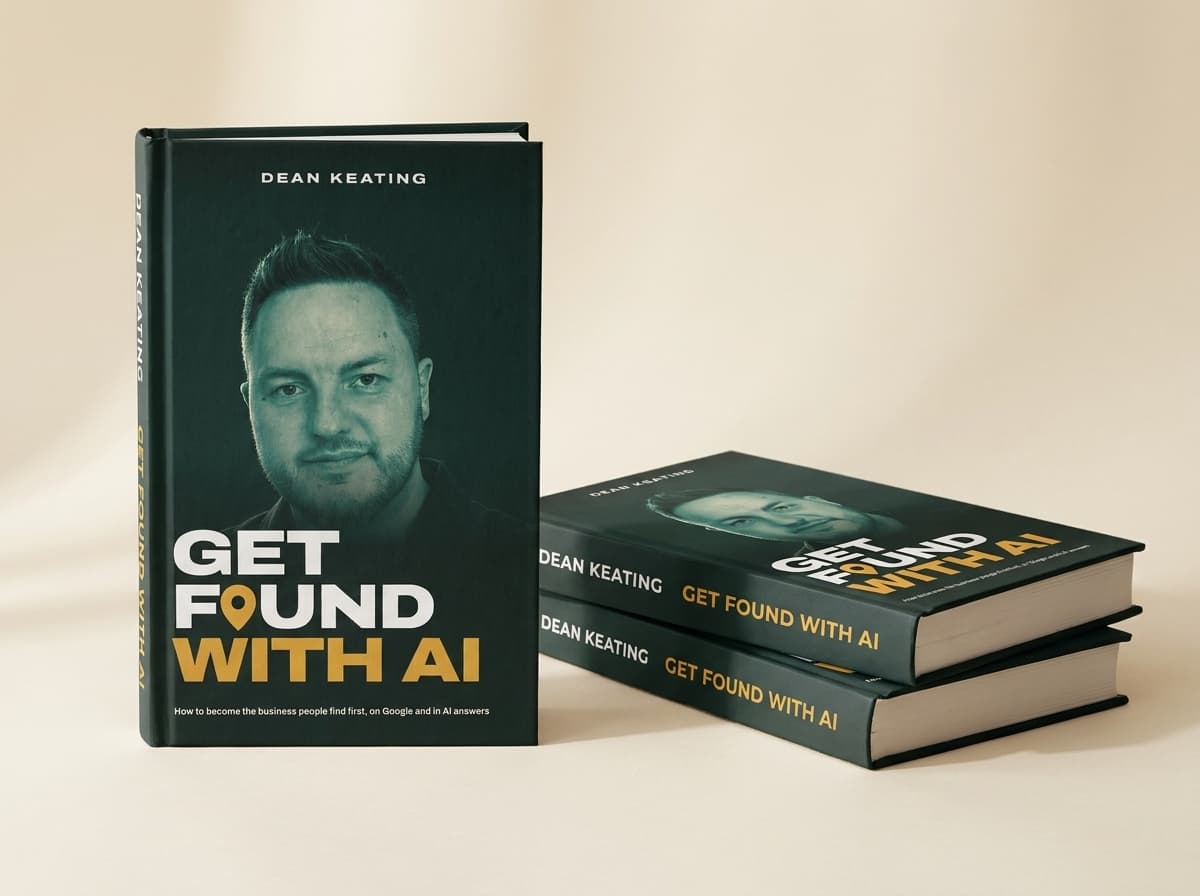
What's one new customer worth to you? A boiler. A roof. A kitchen. A retainer. Put your own numbers in.
£6,000 a year
That's what those customers would be worth in turnover. The book pays for itself after one customer.
Your numbers, your sums. This isn't a forecast or a promise of what you'll get.
Then ask what it's costing you every week to stay invisible to the people searching right now.
This is the same system I teach in person for £3,000 a day. The book is £97. You could read it, do nothing and get nothing back, and no book on earth can fix that part. But if you'll put in the work, this is the map.
Choose how you want it
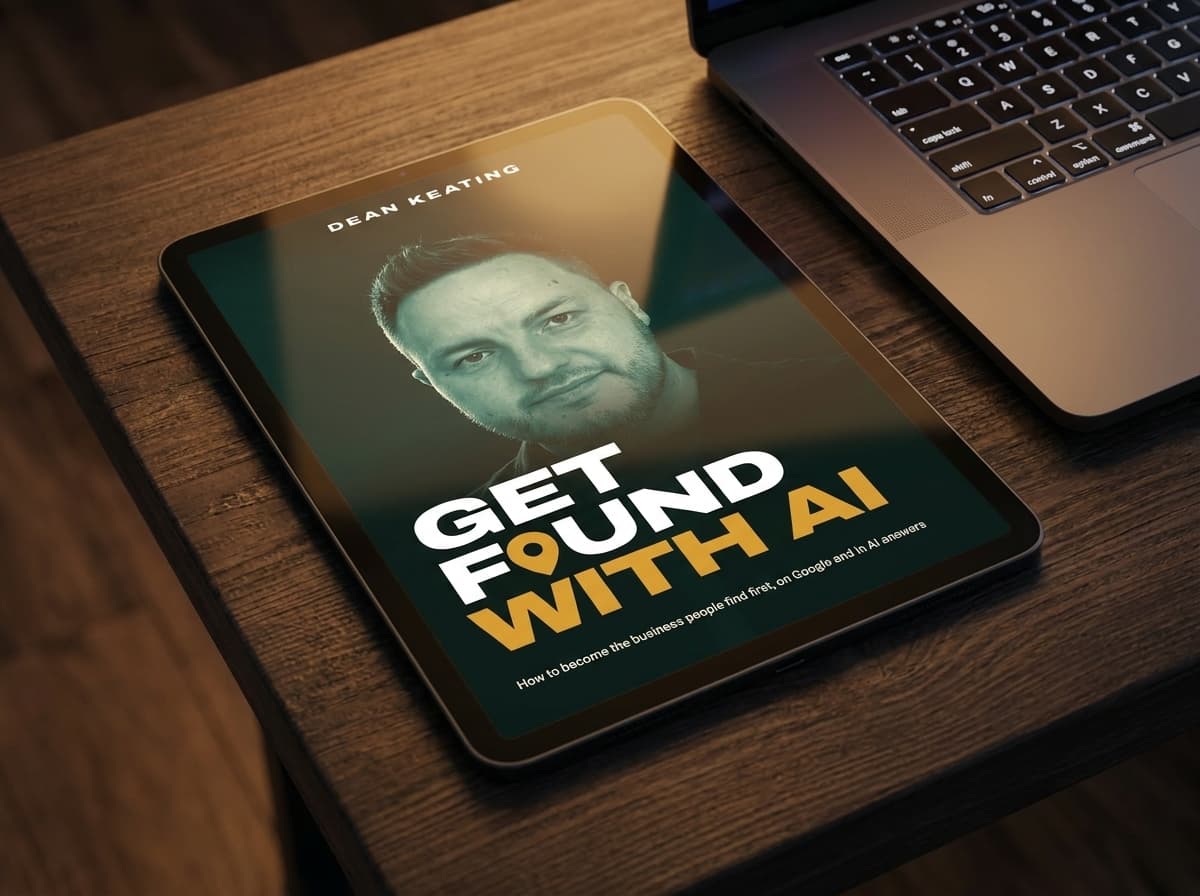
Start tonight
£97
The whole method, on your screen in the next five minutes. Paste your first prompt before bed.
Instant download. Yours to keep.
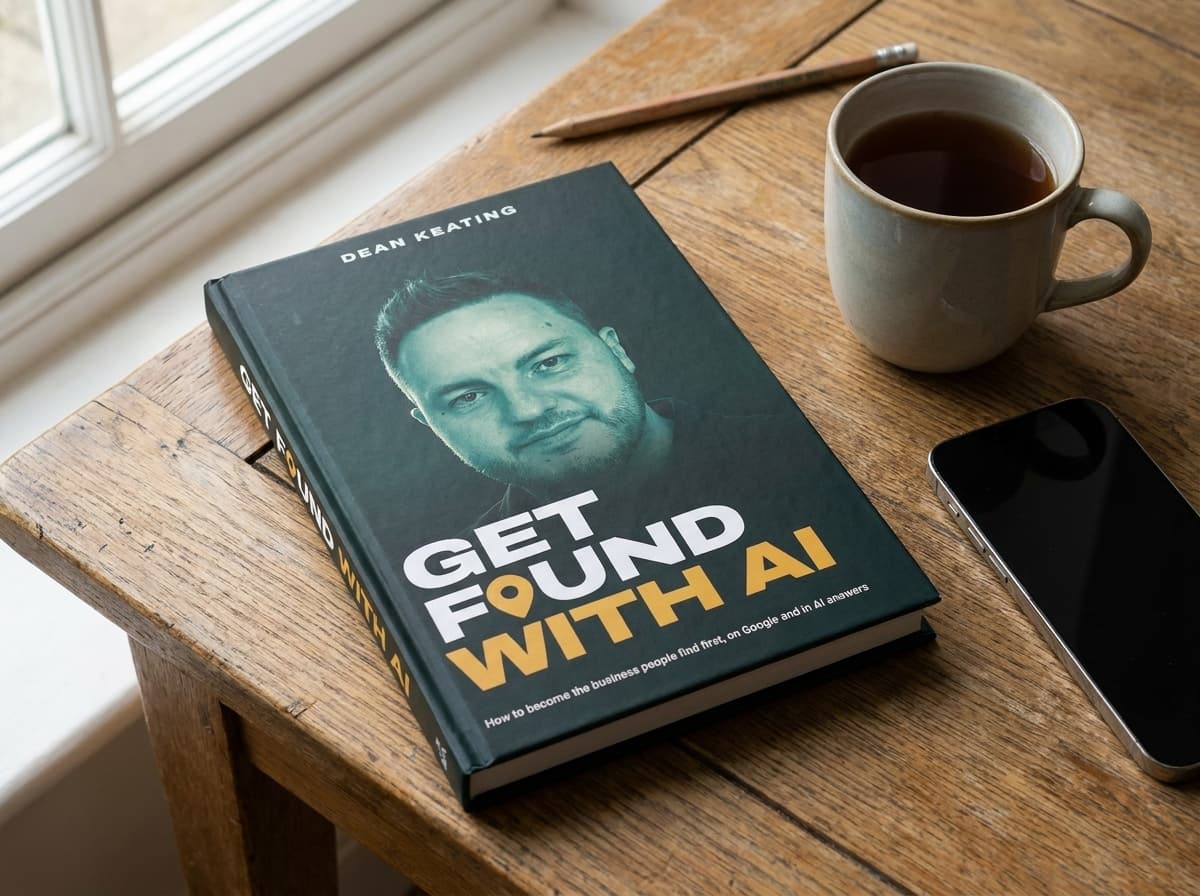
The one to scribble in
£149
The one you scribble in, leave open by the kettle and actually finish. Printed to order in the UK and delivered to your door.
UK delivery included. Printed when you order.
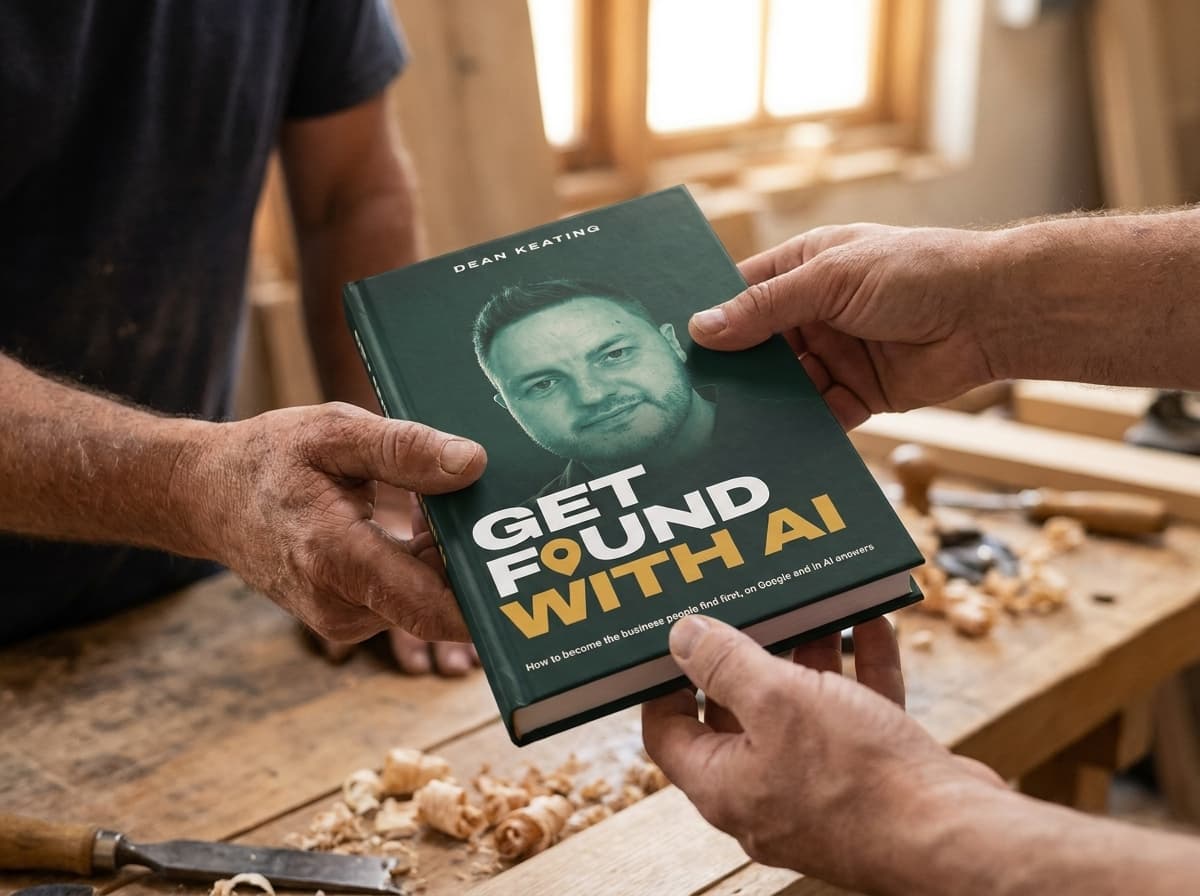
There's only one of me
£3,000
I'll bring the book to you in person. Anywhere. Then I'll stay for the day, and we'll work through the system on your business until you can run it without me.
We agree the date together after you book.
Then you know what it feels like to pay for activity you can't check. This is built the other way round: one search, one page, one date, one enquiry, written down where you can see it. If something isn't working, you'll know which link is broken.
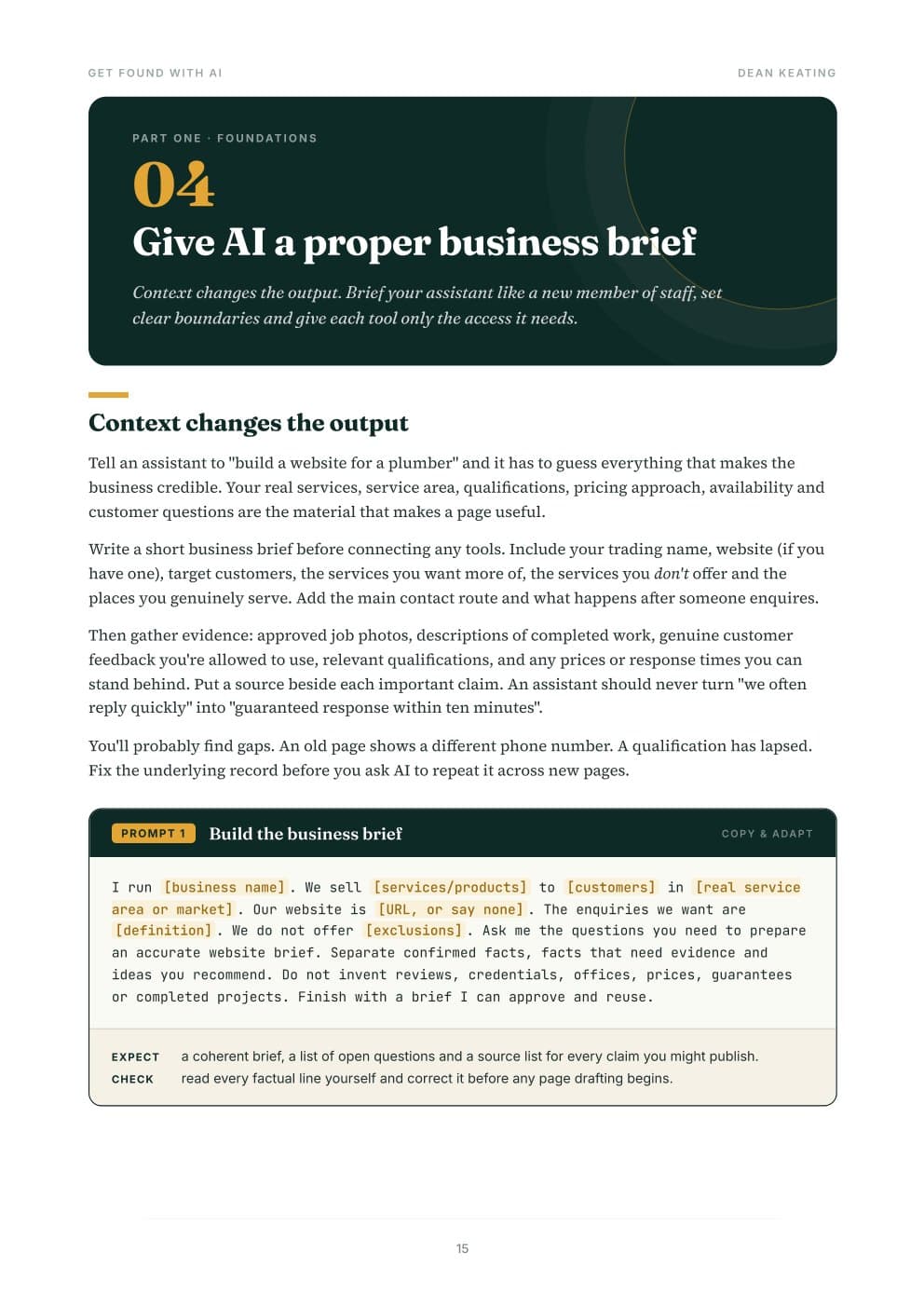
Tell an assistant to "build a website for a plumber" and it has to guess everything that makes the business credible. AI is only as good as the brief, the facts and the checks you give it. That's what the book gives you.
You don't need to become a web developer. You need to know what you're asking AI to build, what it's working from, and how to tell if it helped. Every prompt comes with what to expect and what to check.
Probably not. Keep it. You take a baseline, research the searches and audit your pages. A rebuild is a decision you'd have to justify, not the price of admission.
There's a short route through the book for exactly that. One finished improvement beats a big unfinished build.
It will if you let it. A lot of the book is about not letting it: real facts, sources beside every claim, and a check you do yourself before anything goes live. My strongest instruction in the whole talk was simple: don't lie.
Many of the examples are local trades, because a boiler search and a paying customer are easy to connect. There are worked examples for other kinds of business too. The questions are the same: who needs you, what do they search for, and why should they contact you?
An AI subscription, a domain and hosting, if you don't already have them. The book tells you what to budget for and which free Google tools to use. You can use all of it without buying anything else from me.
No, and be wary of anyone who does. Nobody controls Google or ChatGPT. Results depend on your market, your offer and whether you do the work. What I can give you is the method I use, and a way of measuring whether it's working.
Make sure the answer has your name in it.
Or have it printed, or have me bring it